Retention is the lever that matters
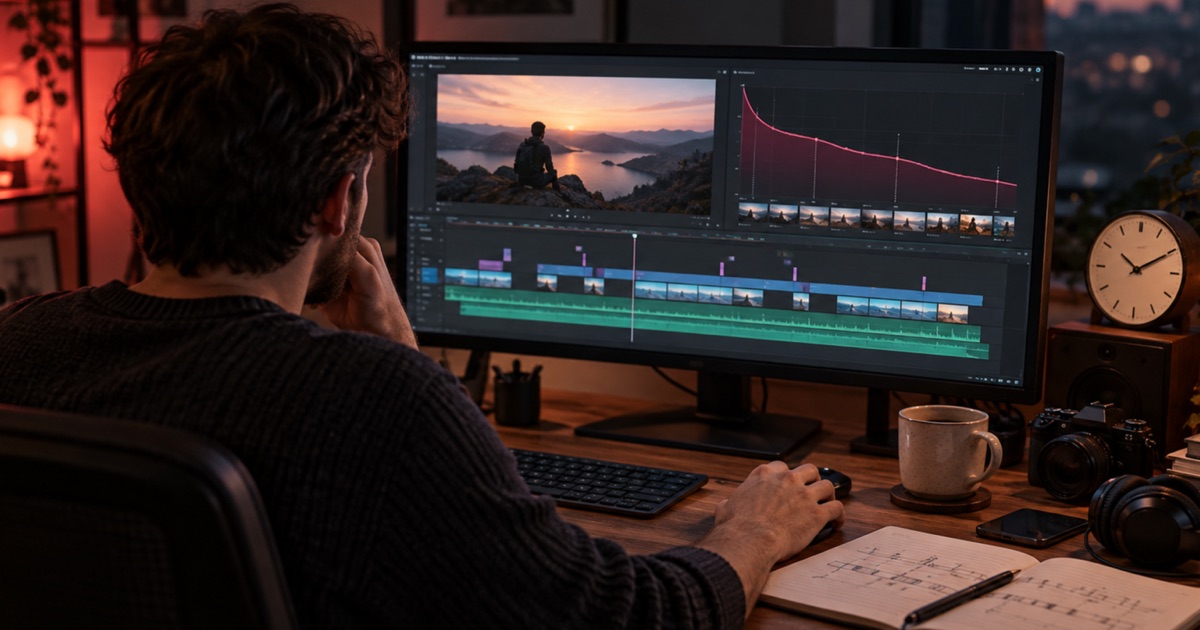
Total watch time is just retention multiplied by views. Improve the percentage of each video people watch, and every view you already get is worth more. Open with the payoff, cut the slow setup, and make sure the first 30 seconds prove the video is worth staying for. Your retention graph tells you exactly where people leave: treat every big drop as a lesson for the next upload.
Length is a tool, not a goal. A tight 8-minute video that holds attention beats a padded 20-minute one that people abandon. Make videos exactly as long as the topic deserves and no longer.
Think in sessions, not single videos
YouTube rewards creators who keep people on the platform, not just on one video. That is why the video someone watches after yours matters. Use end screens, playlists and clear “watch this next” prompts to chain your content together, so one view becomes three. A good series or playlist can multiply your watch time without a single extra upload.
- Group videos into binge-able playlists by topic
- Point every ending to the most logical next video
- Make sequels and multi-part series people want to continue
Reaching 4,000 public watch hours
The Partner Programme requires 4,000 valid public watch hours in the last 12 months (or 10 million valid public Shorts views), alongside 1,000 subscribers. The fastest honest route is a small library of videos with strong retention that keep earning watch time long after upload: evergreen topics beat one-off trends here.
Promotion can help by bringing more of the right viewers to your best long-form content, which is where real watch hours accumulate. A managed watch-time campaign through Google Ads reaches relevant viewers with genuine advertising. Note that advertising watch time is reported separately and YouTube decides what counts toward the programme, so treat promotion as audience discovery, not a monetization shortcut.
Where watch time actually comes from
Open the traffic sources report for your channel and the picture is usually lopsided. Suggested videos and browse features, the home feed and the up-next column, supply most watch time on established channels, because those viewers arrive already in a watching mood and tend to stay. YouTube search supplies fewer hours per view but attracts people with a specific question, which makes it the most reliable source for evergreen how-to content. The subscription feed matters most in the first day after upload. External traffic from social posts, forums and messaging apps is the least efficient: those viewers came for a link, not a session, and many leave early.
This changes what "get more watch time" should mean for you. If most of your hours come from suggested and browse, the lever is session behaviour: what people watch after your video, and whether your uploads lead into each other. If search is your main source, the lever is covering the questions your audience actually types, with titles that match them. Chasing external traffic is the least productive place to start, because it brings the shortest sessions.
Check the report monthly rather than daily, and watch the trend per source. A channel whose search hours are rising is building a library that will keep paying; a channel living on one viral suggested spike has watch time that will fall as fast as it rose.
Fix the three places people leave
Retention graphs on almost every channel show the same three cliffs. The first is the opening. A large share of the audience decides in the first thirty seconds whether the video is what the thumbnail promised, and a long intro, a channel jingle or a minute of context before the point costs more watch time than anything else you do. State the payoff, show it is coming, and get into it.
The second is the sag in the middle. Viewers who survive the opening drift away where the video stops delivering new information: a repeated point, a tangent, a slow demonstration. The retention graph marks the exact minute. Cut it, or put something there worth staying for: a result, a change of scene, a question the rest of the video answers.
The third is the ending. Watch time is lost when the video winds down with thanks, requests and a slow fade, because viewers leave the moment they sense it is over. End on the last useful point, then hand them the next video with an end screen while they are still watching. A clean ending adds watch time twice: once on this video and again on the one you sent them to.
- First thirty seconds: payoff first, context later.
- Middle: cut or replace the minute where the graph dips.
- Ending: last useful point, then straight to the next video.
A thirty-day watch time plan
Week one is diagnosis. Pull the retention graph for your ten most-viewed videos, note where each one loses people, and sort your library into two groups: videos that hold viewers past the midpoint and videos that do not. The first group is what you will build on; the second is what you will learn from.
Week two is structure. Put the strong videos into playlists by topic, in the order a new viewer would want to watch them, and point every end screen at the most logical next video rather than the newest one. This alone changes how many videos a session contains. Week three is the next upload: plan it to open faster and end cleaner than anything before it, and make it a natural sequel to your strongest video so the end screens lead into it.
Week four is amplification. Take the video that held viewers best and give it more of the right audience. That can be a community post, a share in a place where the topic is discussed, or a modest promotion campaign aimed at viewers who match the content. Promotion only multiplies what a video already does, which is why it comes last in the plan and only for the video that earned it. Judge it by the retention it shows in your analytics, not by the hours, and remember that advertising watch time is reported separately from the hours YouTube counts for the Partner Programme; our watch time buying guide explains that distinction in full. For long videos that already hold viewers, watch-hour campaigns through Google Ads bring in real viewing time; the video has to be at least 60 minutes long.
Curious what watch time turns into once monetised? Try the free YouTube money calculator.
If you are weighing paid watch hours, read 5 ways to buy YouTube watch hours, compared first.
For long videos that already hold attention, watch time packages and views can bring more people to them; 2 free watch hours are a low-risk test.
Use retention math to choose the right improvement
Watch time is the result of reach multiplied by how long people stay. If impressions are low but retention is strong, the next lever is topic selection or packaging. If clicks are healthy but watch time remains weak, the problem is inside the video. Separating those cases prevents you from changing a good thumbnail when the real issue is a slow middle section.
Compare similar formats rather than judging every video against a single channel average. A concise tutorial and a long interview create different viewing patterns. Look for relative improvement within each format, especially the first 30 seconds, the largest exit point and the percentage of viewers who reach the promised payoff.
Do not confuse advertising watch time with YPP watch hours
Google Ads can report how long people spend watching video ads, and that information is useful for comparing creatives and audiences. YouTube, however, states that watch hours gained through ad campaigns do not count toward the public watch-hour threshold for the YouTube Partner Program. A campaign can support discovery and audience learning, but it is not a legitimate way to purchase YPP eligibility hours.
Build qualifying watch time through public content that viewers choose to continue watching organically. Use promotion only where it has a clear awareness or audience-testing role, and measure whether it leads to later organic viewing rather than presenting paid watch time as a threshold shortcut.
Frequently asked questions
How many watch hours do I need to monetize?
The main path requires 4,000 valid public watch hours in the previous 12 months plus 1,000 subscribers, or 10 million valid public Shorts views in 90 days.
Do longer videos get more watch time?
Only if people keep watching. A shorter video with high retention often earns more total watch time than a long one people abandon early.
Can I buy YouTube watch time for YPP eligibility?
No. You can advertise a video to real viewers and measure ad watch time, but YouTube states that watch hours gained through ad campaigns do not count toward YPP eligibility thresholds. Avoid any service selling guaranteed qualifying hours.
Does Shorts watch time count toward the 4,000 hours?
No. Watch time from Shorts feed views is excluded from the 4,000 public watch hours; Shorts have their own eligibility path based on valid public Shorts views. Long-form hours and Shorts views are tracked separately.
Does deleting or privating a video remove its watch hours?
Yes. Only watch time on public videos counts, so hours from videos you delete, make private or unlist stop counting toward the threshold. Keep your best long-form videos public while you build toward eligibility.
Official references
Platform rules and product names can change. Use these official YouTube and Google pages to verify the current position before making a campaign or monetisation decision.